

Whom do we trust when we’re looking for information? Increasingly, research shows that Americans are more likely trust friends, peers and word-of-mouth over “experts.” For instance:
- A 2007 eMarketer survey of the most trusted sources of information for US consumers was topped by “friends, family and acquaintances” and “strangers with experience.” These sources outranked “teachers” and “newspapers and magazines.”
- A CDC study shows that moms trust pediatricians the most, but that they trust “friends and family” more than everybody else, including parenting books, employees in the doctor’s office, and newspaper and magazine articles.
- Heck – just sift through this page at BazaarVoice if you need dozens more examples of this phenomenon.
I’m assuming that reviews from trained professionals (like movie, music, food and software reviewers) would be included under the general “newspaper and magazine” categories, although I can’t be sure.
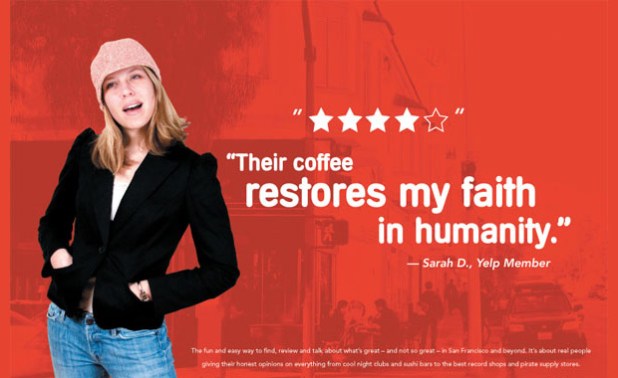
One of the artifacts of the Web 2.0 explosion has been the profusion of sites soliciting consumer feedback. One of the most successful such operations (maybe the most successful – it’s certainly the one I am personally most aware of) is Yelp, but you can find comments on all kinds of businesses at the Web sites for local TV and print outlets, alt weeklies, independent blogs, you name it. Because by golly, in the age of social media, we care what you think!
Which leads me to my reason for writing today. I have been known to comment that, yes indeed, opinions are like assholes – everybody in fact has one. (Well, except for this guy.) However, informed opinions are more like Mercedes-Benz E550 convertibles – that is, they’re somewhat rarer.
Last Saturday I found myself hankering for some good Mexican – specifically, something slathered in the chile verde that this part of the country is famous for. There are a couple of places that have long been my go-to options for green chile – Lime and Benny’s are very different, but I love both. I was feeling like exploring, though, maybe trying something new, and I remembered that a week or two ago my Yelp e-mailer devoted an issue to “D-town Green Chile Lowdown.” So I dug it out, read the reviews and recommendations, and settled on one of the two places closest to where I live. The commenters had some small carps about various peripheral issues, but the consensus was that the green chile was righteous.
I had to wait awhile for a seat because the place was packed. Good sign, as a rule. I ordered my favorite Mexican dish – beef burrito with chile verde. It arrives, I dig in, and let me tell you, “righteous” isn’t quite the right word. A better word would be … let me think here, because I want to get this right … ummmm … what’s the word for “completely and utterly without any taste whatsoever”?
The beef itself was doing its part to hold down the restaurant’s seasoning costs and the chile, well, put it this way. I’m not a renowned Mexican chef by any stretch, but I have two recipes that are worlds better.
Disappointed? You betcha. I can’t imagine going back there, especially since it was also a dollar or two pricier than other Mexican restaurants in its general class.
I can only theorize that all those positive, nay glowing comments on the sparkling fabulosity of this place’s verde were written by employees or family members of the owners. And that’s the problem with consumer reviews – comments are of no value in the absence of some means for determining credibility. If you’re vested in the business, you may lack objectivity. Or maybe you’re an idiot, which also tends to compromise the value of your contributions.
Sure, I have family and friends I might trust on certain questions – a brother-in-law who’s a CFO in the furniture industry, for instance, might be of some value if I’m hunting for furniture bargains. But I have other relatives and social associates that I wouldn’t trust if I were trying to figure out what color the sky is.
The bottom line is that you can hit a consumer review site, read the comments, and still have no idea how to decide. One product has dozens of positive reviews – that could mean it’s really good. Or it could mean that the marketing group does a good job leveraging the power of social media.
When I got home, the first thing I did was unsubscribe from that Yelp e-mailer. All it can really do is call my attention to businesses I didn’t know about, but I can get that from a lot of places, including a local alt-weekly – and when I go there I can also find reviews from, you know, reviewers. People who do it for a living. I may not agree with them all the time, but odds are their taste buds can distinguish between tasty chile verde and dishwater thickened up with flour. Also, I’m probably not reading something my waiter wrote on his day off.
 wordSmith | Writing / Content Marketing