
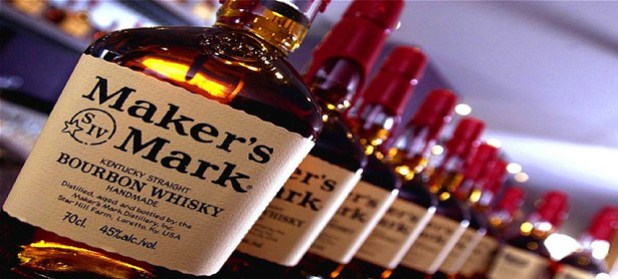
Maker’s Mark illustrates the importance of thinking BEFORE you act

Makers MarkIn case you haven’t been tracking along, the folks at Maker’s Mark (which is owned by Beam, Inc.), faced with more demand than they could meet, recently announced that they’d be lowering their alcohol by volume (ABV) from 90 proof to 84 proof. You won’t even notice, they assured us.

The backlash was swift and loud. Makers Mark customers pitched a hissy fit, and at least one marketing analysta (Roger Dooley, writing at Forbeswondered if the company had committed “brand suicide.”

Do you really want to go on the record as saying the palates of your customers are so unrefined that they can’t tell the difference when the whiskey is diluted? In reality, in blind taste tests most people probably can’t tell the difference between similar colas, beers, whiskeys, etc. Nevertheless, brands still strive to maximize their taste differentiation. Can you imagine Coke saying, “We could change our formula a little, or even put Pepsi in our cans, and not many of our customers would notice.”?

To their credit, MM leadership today changed course, announcing in a public letter that:

…effective immediately, we are reversing our decision to lower the ABV of Maker’s Mark, and resuming production at 45% alcohol by volume (90 proof). Just like we’ve made it since the very beginning.

Good for them. The thing is, we shouldn’t over-congratulate them because this was a butt-stupid mistake to start with. Dooley had commented on their missed opportunity last Thursday:

Maker’s Mark could have used their looming shortage as an opportunity to make their brand stronger. If they encountered sporadic shortages for a period of years, they could raise prices and leverage the scarcity to take the brand up a notch in prestige.

And all he was doing was stating what every smart marketer in America knew instantly: you never give people less. If the choice is between raising prices or cutting portions, for instance, raise the prices. Customers may not like it, but they react worse when they find themselves getting less for their money. Psychologically, when you do so you are taking something away from them.

Same thing with the MM trainwreck. The shortage was arguably even good news from a brand perspective because the unanticipated shortage (whatever that may say about your forecasting operation) emphasized the demand for your product. You could have responded with something like this:

Wow, folks, you like our product so much that you bought more than we expected. It’s going to take us about five or six years to get caught back up because we will not sacrifice the quality of our fine whiskey, no matter how much it costs us. In the meantime, we’re grateful to our customers and salute their discernment.

Instead, you miss the obvious opportunity, you violate the customer’s trust, and you dilute your brand by far more than the three percent you’re cutting the ABV in your now somewhat less prestigious liquid refreshments.

Given that Makers Mark had committed the gaffe, today’s announcement was precisely the right move. But there was no excuse for the mistake in the first place. Now, thanks to a moment of unfathomable stupidity, they’re faced with the challenge of restoring their tarnished reputation.

Maybe Makers Mark will be just fine. Maybe this won’t even register a blip on their sales numbers – time will tell. In the meantime, though, the company’s need to understand what they have done. Leaving the product as is, running a new ad campaign, dumping money into PR aimed at assuring us that everything is hunky-dory, none of that can undo one simple fact: a few days ago, they announced to the world that they can water down their whiskey with no noticeable impact on quality.

That’s a hell of a brand promise, and it’s a bell that you can never unring.

Think. Act. In that order.
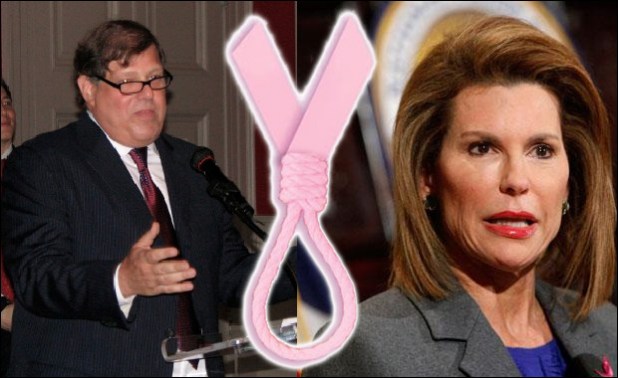
Komen hires the wrong PR firm, missing the boat once again (and a quibble with PR Daily’s coverage of the story)

The Susan G. Komen Foundation has hired a big-hitter PR firm. And not just any PR firm, either.

Now, Komen is assessing the damage, and it’s using a consulting firm founded by two former Democratic strategists. Penn Schoen Berland (PSB), the firm Komen hired to help determine how badly the crisis hurt its reputation, is founded by former Democratic strategists Mark Penn and Doug Schoen.

The goal here seems obvious. Komen’s recent bout of ballistic podiatry cost it massive amounts of support among people who believe that women’s health shouldn’t be held captive to a partisan agenda. The foundation has accurately understood that this means it needs people from the center and points left in order to thrive. Or, at this point, survive. So they go out and hire … Mark Penn.

Wait, what? Continue reading

Double-reverse brand whiplash hits Arizona Iced Tea: a lesson in crisis

Our consumer landscape is dotted by brands that invite us to immerse ourselves in the tastes, sights, sounds, smells and cultures of particular locations, which I suppose are deemed romantic or in some way aspirational. Like the exotic Australian adventure of Outback Steakhouse. A big favorite here in Colorado, of course, is Old Chicago. And a slew of Texas-themed restaurants, like Lone Star, suggests that consumers associate that state with an authentic steak experience.

As you probably know, though, Old Chicago isn’t from Chicago. Continue reading

Bad Business 201: answer the phone

A few months ago I was in job-hunt mode, and during that period I had chats with a number of companies around Denver (mostly PR and Marketing agencies). In August I accepted a new position on the client side, running a wide range of marketing and PR stuff for a locally based financial services firm.

One of my very top priorities (along with assisting the VP of Marketing with a full-blown rebranding and heading up a complete redevelopment of the corporate Web site) was leading the search for a PR agency. I’d talked to most of the shops in town while doing my job search, so I had a decent idea what was out there, and a couple of the places I had talked with struck me as strong possibilities for my new company. So I put them on my big list and then called them to see if they were interested. Continue reading

The problem with measurement

In yesterday’s MediaPost Marketing Daily, Douglas Brooks touched on a subject I’ve been yarping about for some time – measurement. He offers some prudent advice, but sidesteps the issue that’s been bothering me: to wit, our rage to quantification is driven by fear, not expertise, and it often leads us to ignore a whole suite of important decision-making tools.

I would never suggest that ROI doesn’t matter – quite the opposite – and I also wouldn’t argue that quantitative methods can’t provide us with useful data – of course they can. The problem is that American culture has this odd relationship with knowledge and evidence – in any kind of professional enterprise, statistics and numerical metrics are increasingly being taken as the only kind of evidence. If we want to say something about our customer base, we feel an obligation to quantify whatever we’re trying to say. Continue reading

Sprite Yard is the right idea

And this morning, a glimpse of the future:

Sprite Launches Mobile Social Network
by Tameka Kee, Thursday, Jun 7, 2007 6:00 AM ET
MOVE OVER, MYSPACE AND FACEBOOK. Coca-Cola’s Sprite is debuting its own social network, called the Sprite Yard.The brand’s global interactive marketing team is betting that the mobile platform will set new benchmarks for consumer brand engagement.

Launched officially in China on June 1, with plans for a U.S. rollout to start June 22, users connect with the Sprite Yard through any WAP-enabled phone. After texting the word “YARD” to 59666 (LYMON), they are invited to register–and to create a tag name, a profile, and even an avatar. Members of the community can then share pictures, send “Shouts” to their friends, post “Scribbles” to a discussion board, and plan events on a shared calendar.

At the Sprite Yard, users will also have access to “Nuggets” of exclusive downloadable content, from mobisodes (short animated and video content created by Coca-Cola and other media partners) to ringtones. The branding tie-in is designed to drive sales as well as engagement, as content can only be unlocked by using a PIN found under Sprite bottle caps. (Story.)

I’m in no position to predict how well executed this project will be, but the concept is dead-on and I wouldn’t be surprised if it becomes the model for consumer brand mobility over the next couple of years. Continue reading

Doubleclick report missing the mobility picture?

I was reviewing the Doubleclick Touchpoints IV report earlier today, and while I still need to dive a little deeper, there are a couple things I wanted to comment on.

1. The study’s top finding – “consumers acknowledge that online video shows great potential for advertising” – points to the exploding importance of social media. This shouldn’t come as a surprise, but maybe it does. Sometimes I slip into assuming that everybody tracks “the next” like I do, but the truth is that the pace of advance these days is so rapid that it’s hard to keep up even if keeping up is your main job.

2. The study suggests one potentially dramatic finding that the authors either ignored or failed to recognize. I’m going to ask you to study a couple charts from the report and see if you notice something: Continue reading

New Saturn campaign: a victim of old thinking?

Saturn is set to launch an interesting new promotion this Summer.

Saturn to Park Competition On Dealership Lots
by Karl Greenberg
Friday, Jun 1, 2007 5:01 AM ET

SATURN MAY BE ROLLING OUT a fresh line-up of vehicles this year, but consumers visiting Saturn dealers this summer will be surprised by the pair of cars parked next to Saturn’s Aura sedan: Toyota’s Camry and Honda’s Accord.

The effort, a retail version of the overtly competitive “Ford Challenge” campaign by its cross-town rival, lets consumers shopping Saturn’s Aura test-drive the Camry and Accord, as well, when they visit Saturn. Continue reading

US companies underperforming on reputation index?

There’s a lot to be suspicious about anytime you come across a survey-based measure of reputation, especially when you’re working across all kind of international borders and trying to normalize for dramatically different sets of local and regional assumptions about how businesses ought to work. But even given this, the results from a new Reputation Institute study of corporate reputations raise some questions.

Mainly, how come American companies didn’t do better? Continue reading

Gronstedt Group “fika” offers a chance to explore Second Life

If you haven’t started investigating Second Life yet, you might want to look into it. The sheer neatness of the environment notwithstanding, it’s starting to emerge as a viable business platform and it looks like the tipping point may be just around the corner (full Voice Over Internet Protocol integration is set to roll out in the coming weeks, and the guess here is that VOIP is going to blow the lid off the joint). Lots of companies and entrepreneurs are already using the 3D virtual environment for commerce (using it to buy and sell in-world goods and services and developing storefronts that allow you to buy “First Life” goods and services, as well).

In addition, 2L is gaining traction as an internal comm app and shows tremendous potential as a corporate training platform. One firm that’s early-in on the training front is e-learning and consulting shop Gronstedt Group. Continue reading